Wuthering Heights Is Weird. Emily Brontë Was Even Weirder
Was she agoraphobic, neurodivergent, in love with her own brother? Historians break down the questions that still swirl around the most enigmatic Brontë
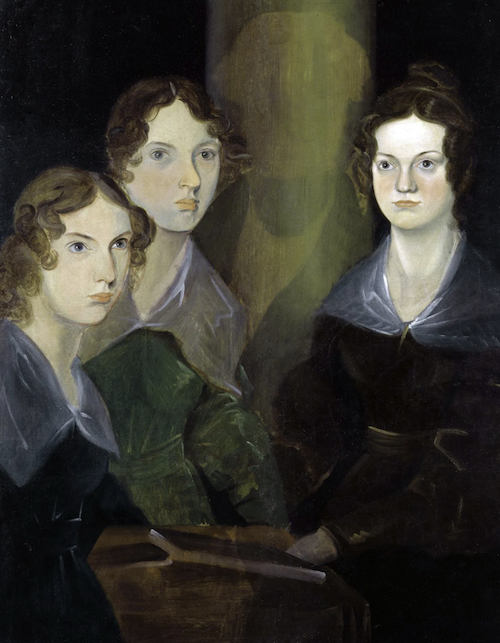
Of literature’s “three weird sisters”—as writer Ted Hughes famously dubbed the Brontës—Emily is the weirdest, probably because history knows so little about her. Sandwiched between bestselling Jane Eyre author Charlotte, the family’s press-savvy manager and myth-maker, and Agnes Grey writer Anne, the sweet and pious peacemaker, was Emily Jane, the elusive middle sister whose personality still evades readers nearly two centuries after her untimely death.
“The strange one,” as she’s often called, may have been autistic, antisocial, agoraphobic, and/or anorexic. She may have been a lesbian, or in an incestuous relationship with her brother. In any case, the author of Wuthering Heights—arguably the horniest Gothic novel ever written—was probably a virgin with a vivid imagination. As a soaking-wet Heathcliff on horseback rides over wild moors and onto movie theatre screens yet again in Emerald Fennell’s reimagining of the novel, here are some burning questions biographers are still asking about the strangest Brontë sister.
How did one family produce three seminal authors?
Most every novel written by a Brontë contains some variation on their father’s eternal romantic predicament: a penniless but upwardly mobile outlander, seeking an impossible match with a rich and prominent young woman. Patrick Brontë was a particularly unattractive marriage prospect who had neither land nor title at the advanced age of 47. The displaced Irishman in Haworth, Yorkshire, was a failed writer and poet turned Anglican priest with a meager salary and precarious financial future; following his wife’s death from cancer, he was also a widower with six small children. After numerous proposals failed spectacularly, the Brontë patriarch “resigned himself to celibacy,” wrote Juliet Barker in her 1,000-word tome The Brontës, to “make alternative plans for the future of his children.”
For the record, his children in their entirety were: eldest daughter Maria, named for their mother; Elizabeth, named for the aunt who moved in to help upon her sister’s death; Charlotte, the surrogate maternal figure and household manager; Branwell, the sole Brontë brother, initially considered a child prodigy; imaginative and independent Emily Jane, born in 1818; and baby Anne, beloved by all the rest.
Both Maria and Elizabeth caught tuberculosis at boarding school and died around age 10. After that, the remaining Brontë children were promptly pulled out to be self-taught in relative isolation. “They were removed, but they were really up-to-date about the world around them,” says Deborah Lutz, author of This Dark Night: The Life of Emily Brontë. While practicing sewing and drawing, they took turns reading aloud from local newspapers—in English and French—and Gothic stories from magazines. “Emily probably read Frankenstein and Jane Austen, though we don’t know what she thought about it,” says Lutz. “She read Lord Byron and lots of Romantic poets, and she loved Sir Walter Scott’s books in particular.”
The Brontës had a habit of scribbling text—symbols and poems in tiny handwriting—in the margins of a book or on ripped scraps, as new paper was expensive. “They collaborated on stories, turned them into plays and acted them out, then wrote them down,” says the Brontë scholar. Admittedly, Lutz is “team Emily,” but also recognizes the siblings’ collective greatness. “Collaboration, plus some tension and competitiveness, is a big part of their brilliance,” she says.
Was something “wrong” with Emily?
The young Brontë bunch collectively invented an elaborate paracosm—an imaginary world all their own. They dreamed up “Glass Town,” a colonial city in Africa set up by their 12 wooden toy soldiers, and “Angria,” its expanding empire with political intrigue and warring territories. When younger Emily and Anne felt excluded, they conjured up “Gondal,” a rival island kingdom ruled by ruthless and powerful monarch Augusta.
But while the others grew up and out of their imaginary worlds, Emily seemed more comfortable inside them than in real life. “I imagine Emily pretending she’s a character in Gondal, which would mean that if you ran into her when she’s in her head like that, she’d seem very distant and reserved,” says Lutz.
Hers is a generous interpretation of Emily’s increasingly odd behavior. She had no friends, by choice, and rarely left her home. She avoided eye contact with strangers, stayed silent in public even when spoken to, and lacked social tact. Very tall and whip-thin, she wore outdated fashions and refused to squeeze herself into a corset. While teaching at age 20, holding her one and only job, Emily told her pupils she much preferred her mastiff dog, Keeper, to every one of them. Six months later, literally homesick with “wasting disease”—she barely ate—Emily resigned from her position and moved home.
Modern armchair psychologists have inevitably diagnosed Emily Brontë with a revolving door of diseases and disorders, from “neurosis” to agoraphobia to social anxiety to—the most popular pick of recent years—neurodivergence or autism. “She was probably somewhere on the spectrum, like lots of people are,” says Brontë biographer Nick Holland. “Autism would certainly explain a lot.” But the meaning, if any, of a modern-day diagnosis is debatable. “The idea of autism didn’t even exist in the 19th century,” says Lutz, “so it’s not very helpful.”
Why do we know so little about Emily?
While all the Brontë sisters kept diaries, Emily’s was sporadic and secret, locked away in her writing desk. Similarly, while some three volumes’ worth of Charlotte Brontë’s letters have survived, Emily left only three letters total. Also, MIA are her and Anne’s childhood stories, as well as all drafts of Wuthering Heights and its much-anticipated follow-up, which Emily was said to be writing at the time of her death.
Granted, the middle sister was so shy and private about her writing—and everything else—that if it had been up to her, the Brontës might never have been published at all. “Emily had been writing poems in secret when Charlotte, at least as she told it, ‘accidentally’ chanced upon the book,” says Holland. At first, Emily was furious about the invasion. But the enterprising eldest daughter pushed a very saleable angle. “It was Charlotte’s idea to publish all their poems together,” says Holland. Beneath three obvious pseudonyms—Currer, Ellis, and Acton Bell—the Brontës began their publishing careers.
Between October and December 1847, Jane Eyre, Wuthering Heights, and Agnes Grey (in fitting order of eldest-down) were published in lightning-fast succession. All received mixed reviews with a similar overarching criticism: Were these dark, violent, erotically charged novels moral? And who could have written books that were so depraved?
“Everyone knew the names were pseudonyms—no one’s really named ‘Currer Bell,’” says The Invention of Charlotte Brontë author Graham Watson. The books’ interpretation relied entirely on the identities of their creators. “People wondered, were they men or women? What was their social class? This determined whether these books, full of vice, anti-Christian and anti-authoritarian sentiment, were forgivable.”
Wuthering Heights was the most controversial of them all, and Emily, the sister who was least willing or equipped to deal with public scrutiny. In order to keep her strange personality protected, it’s likely someone—perhaps Charlotte, or their father, or even Emily herself—hid or destroyed all of her other work, as well as all the journals and correspondence they could find.
How could the shy daughter of a priest imagine Wuthering Heights?
Ironically, once a posthumous edition revealed Emily Brontë as Wuthering Heights’ author, many critics couldn’t believe she had penned this passionate story of obsessive love. “In the 1940s and 50s,” says Lutz, “many serious scholars believed that Branwell actually wrote it—because a woman couldn’t have written a book like that.” (In reality, Branwell Brontë almost certainly couldn’t have written any book, given his alcoholism and the opium addiction that would eventually kill him.)
But Branwell was one of so few men in Emily Brontë’s world that historians have considered him to be a possible inspiration for Heathcliff, Catherine’s adopted brother turned love interest. Another possibility is William Weightman, the flirtatious curate with whom the 2022 film Emily imagined a torrid affair. Robert Heaton was a neighbour said to have planted Emily a pear tree, which embarrassed her. In Sexual Personae, Camille Paglia argued Emily was a lesbian, and she herself is Heathcliff—yearning for love she cannot have.
Another once perfectly reasonable explanation for the Brontës’ monstrous literary talent? Witchcraft. Ted Hughes likened the trio to “three weird sisters,” the witches whose prophecy begins Macbeth—invoking an old theory with deep roots. “That they were witches with some kind of elemental power came from the late 19th-century idea that women couldn’t be intellectuals or craftswomen, they were just channels receiving and transmitting information,” says Watson. It’s “all nonsense, of course,” he adds, though perhaps not entirely undeserved—Emily was eternally fascinated with superstition and the occult.
Who or what killed Emily Brontë?
Officially, like the two sisters who predeceased her, tuberculosis unexpectedly killed 30-year-old Emily Brontë in December 1848. Unofficially, she died of a broken heart for love of her brother. Just three months earlier, Branwell had succumbed to ill health caused by years of severe addiction (and tuberculosis). In May 1849, Anne died like all the rest: of tuberculosis.
To this day, tuberculosis is the most infectious killer in the world. Yet even in the 19th century, three tuberculosis deaths in nine months was statistically strange. The residents of Haworth had much higher mortality rates than those of similar neighbouring towns, leading historians to a grim hypothesis: The parsonage’s overcrowded graveyard had leaked decomposing material and deadly bacteria into the local water supply. Charlotte died just six years after Anne. Patrick Brontë outlived all his children, expiring at the ripe old age of 84.
Not that it would have made much difference, but before she died, Emily refused all medicine and medical advice. Outwardly, she grew paler and impossibly thin, but “will give no explanation of her feelings” and “will scarcely allow her illness to be alluded to,” wrote Charlotte. Even after she got sick, Emily went about her days as she always did, such that no one realized how close she was to death. Legend says she refused to retire to her bed, as is customary, and died on the sofa in the dining room instead. True or not, some 80,000 Brontë devotees still visit annually their former home in Haworth, now a Brontë museum, to see the sofa that once held the strangest Brontë—a defiant enigma until her very end.